פרוכות לארון קודש
Parochet Beit HaMikdash (פרוכת בית המקדש): The Ark Curtain That Evokes the Holy Temple
Discover what a parochet beit hamikdash depicts, why congregations choose it, and how to pick the right Temple-themed ark curtain.
מערכת ארגמן · 15 בנובמבר 2026 · 5 דק׳ קריאה
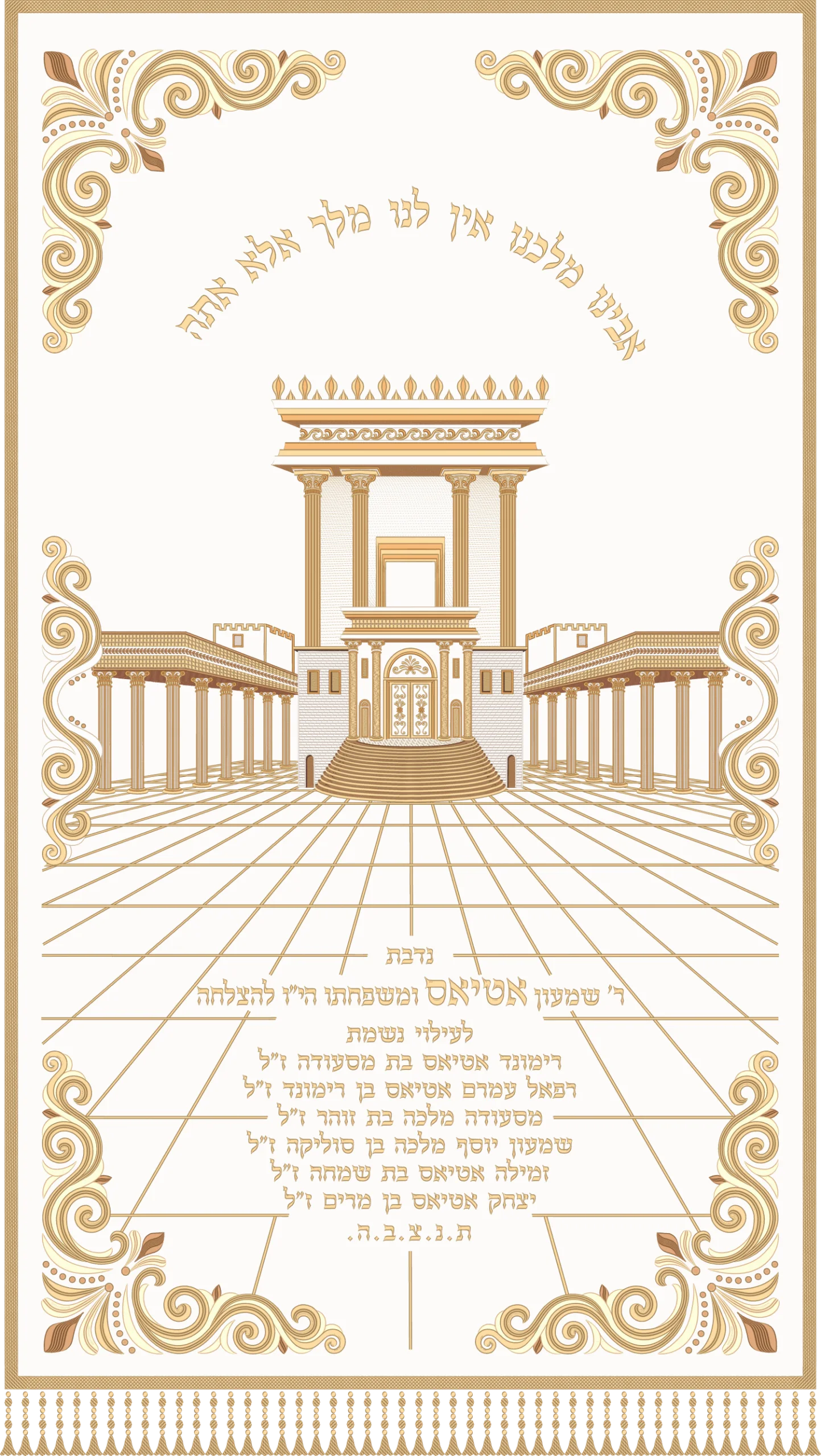
A parochet beit hamikdash (פרוכת בית המקדש) is a hand-embroidered ark curtain designed around imagery of the Holy Temple in Jerusalem — its façade, the menorah, the Temple Mount, or the twelve tribes who once brought their offerings there. Hanging in front of the aron kodesh, this style turns the synagogue's holiest spot into a visual reminder of what stood in Jerusalem and of the hope for its rebuilding. This article explains what sets the design apart, how it is made, and what to think about when choosing one for your own synagogue.
In Brief
- A פרוכת בית המקדש is an ark curtain embroidered with imagery of the Holy Temple, such as its façade, the golden menorah, or the Temple Mount.
- The design is often chosen to evoke remembrance of the Beit HaMikdash's destruction and hope for its future rebuilding, themes that surface around Tisha B'Av and the Three Weeks.
- Temple-themed curtains frequently combine several elements at once, including the twelve tribes, a Jerusalem sunset, or mountain backdrops framing the Temple silhouette.
- Like other parochot, it is custom sized to the congregation's aron kodesh and can carry a dedication inscription in memory or in honor of someone.
What a Parochet Beit HaMikdash (פרוכת בית המקדש) Depicts
A parochet beit hamikdash depicts scenes and symbols associated with the Temple that once stood in Jerusalem, rather than the more general motifs — crowns, lions, or Tablets of the Covenant — found on many other ark curtains. The imagery is meant to carry the eye, and the heart, toward Jerusalem every time the congregation faces the ark. Common elements include:
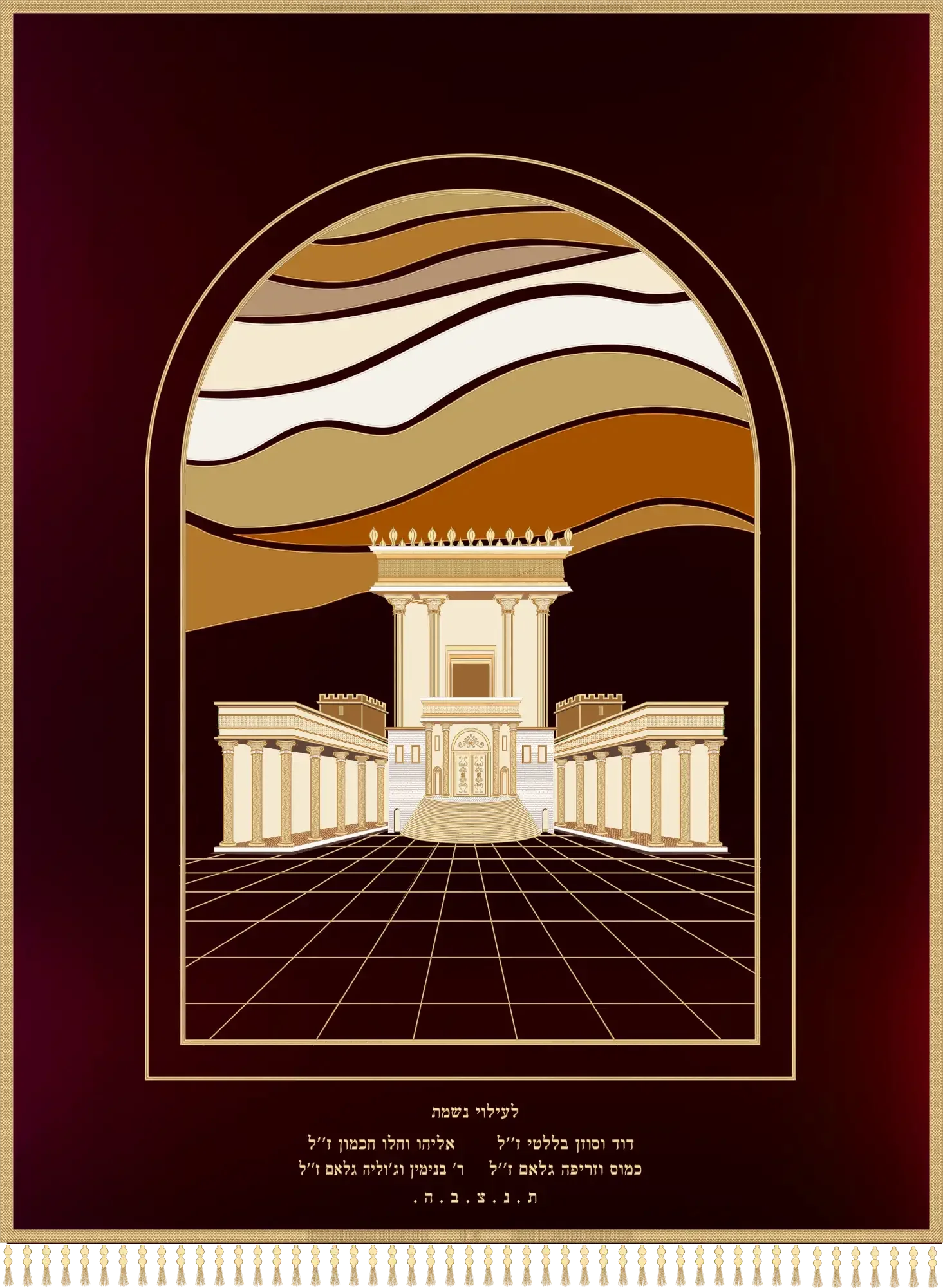
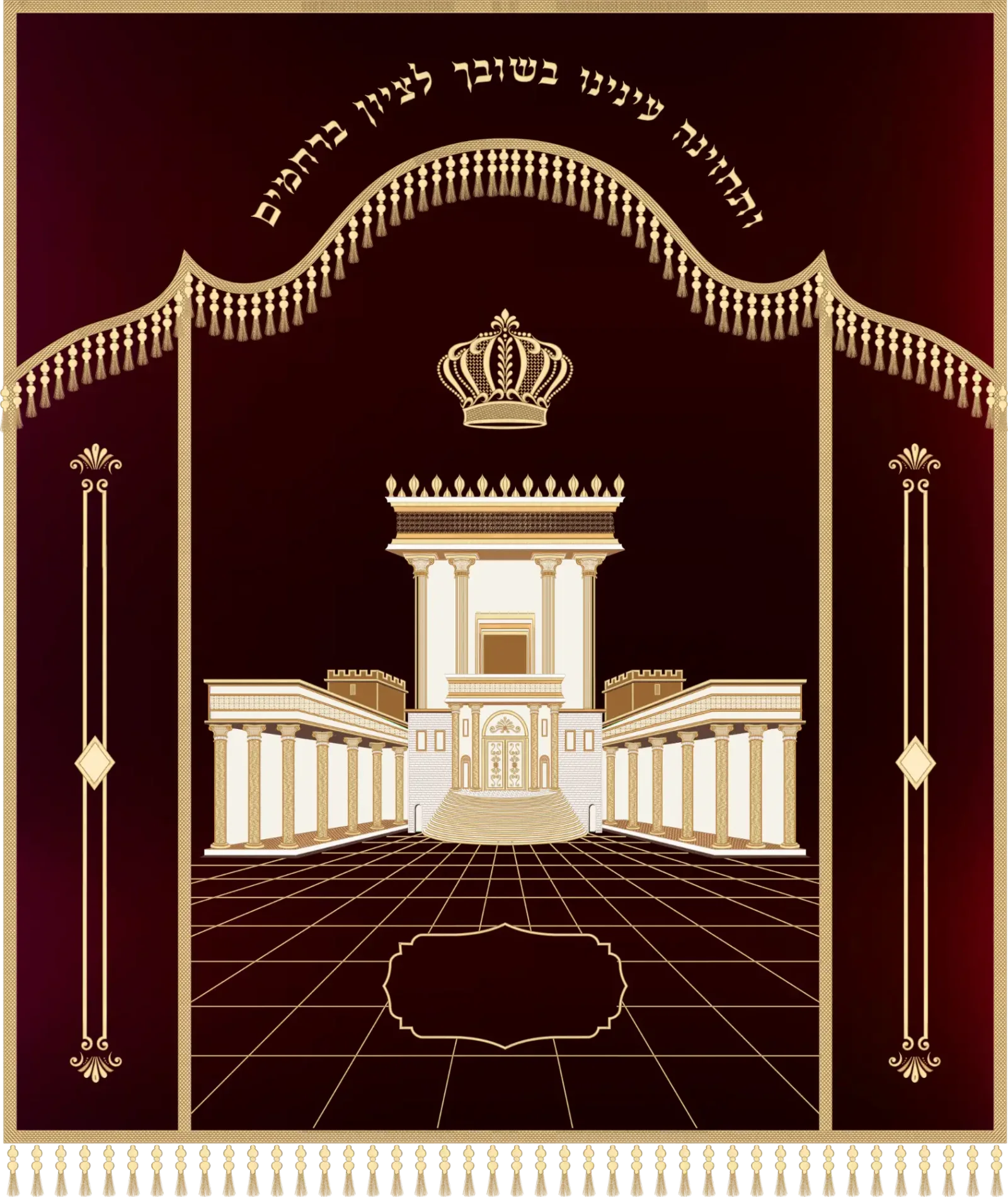
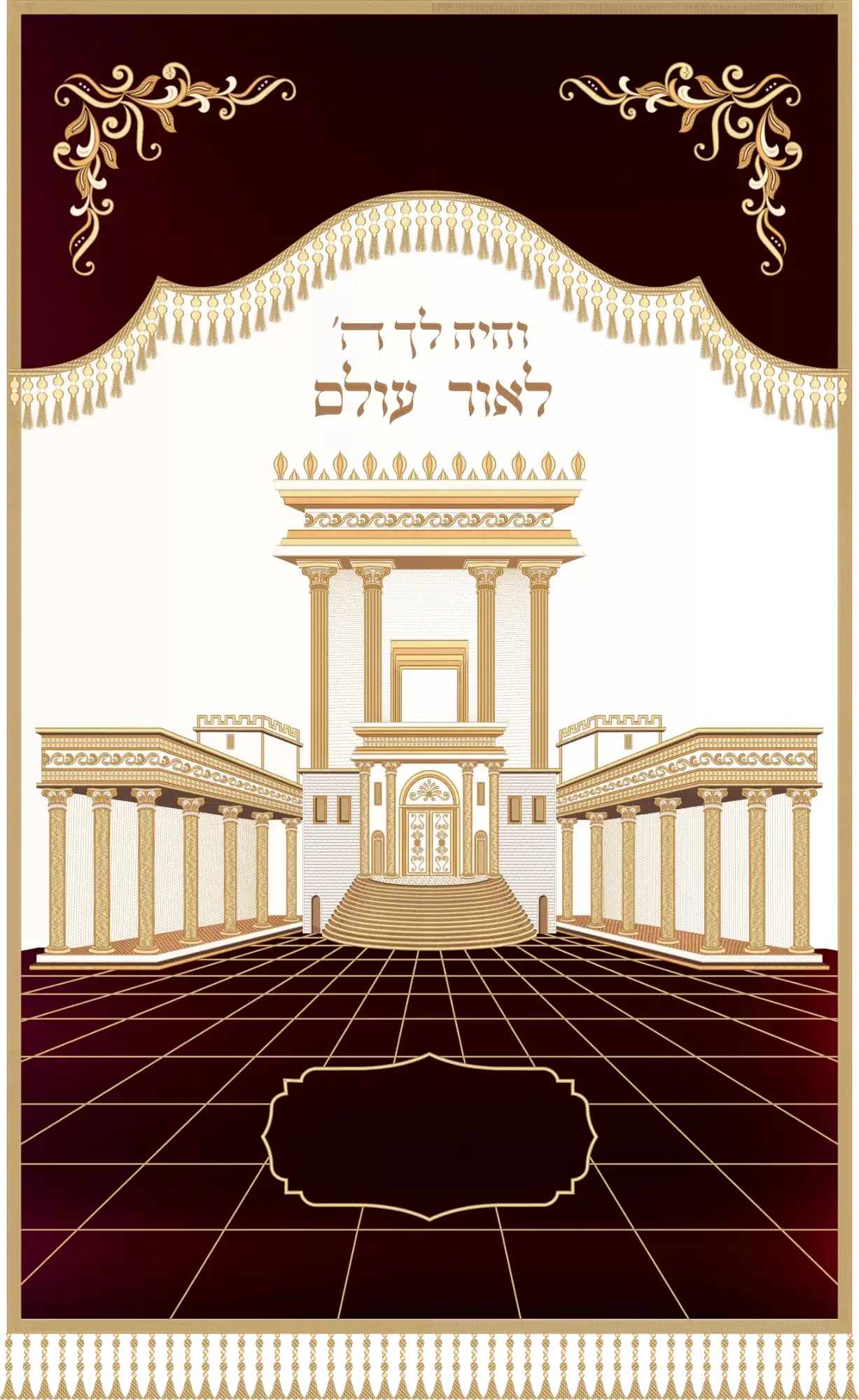
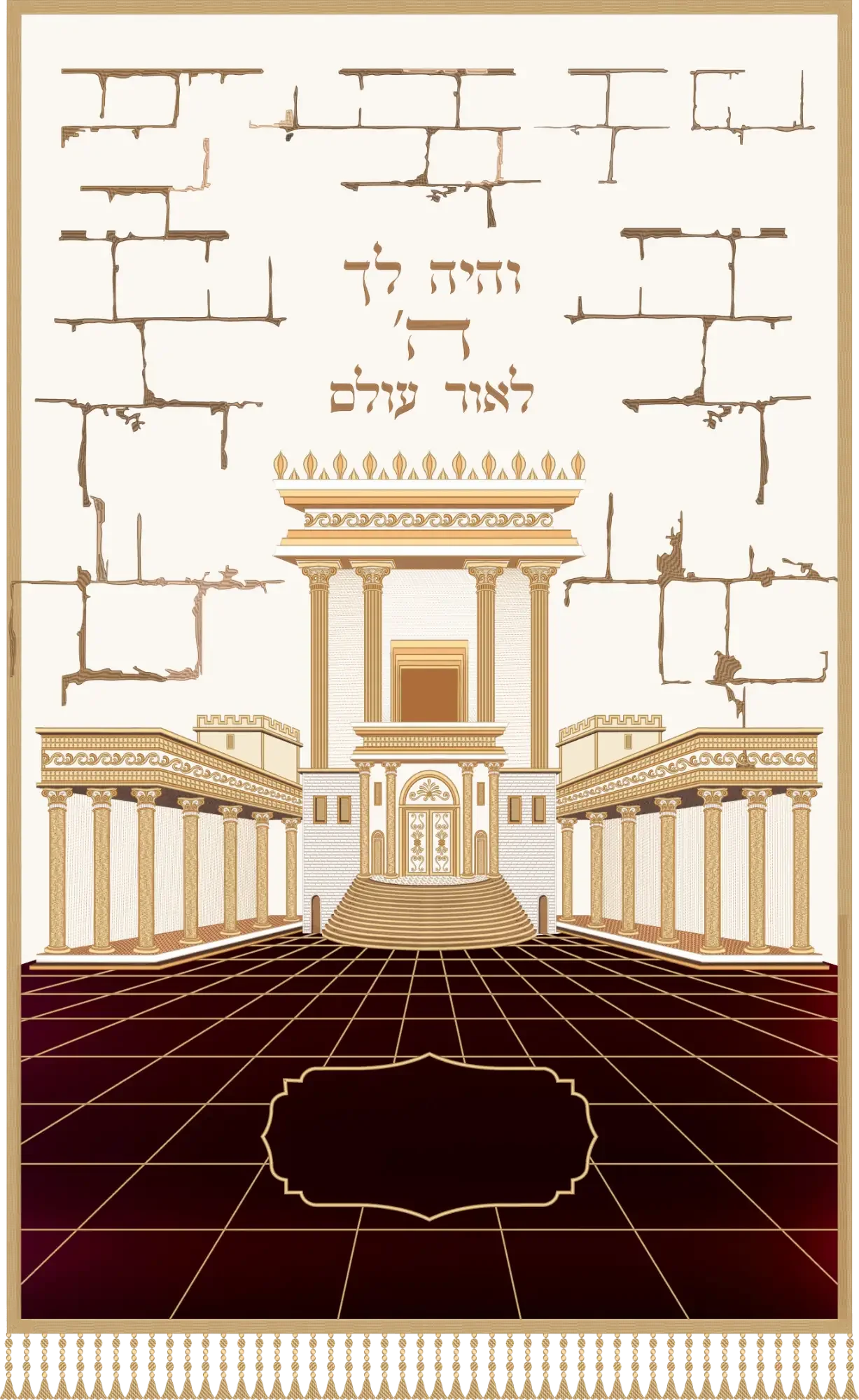
- The Temple façade and columns, as rendered in this ornate Temple-themed parochet.
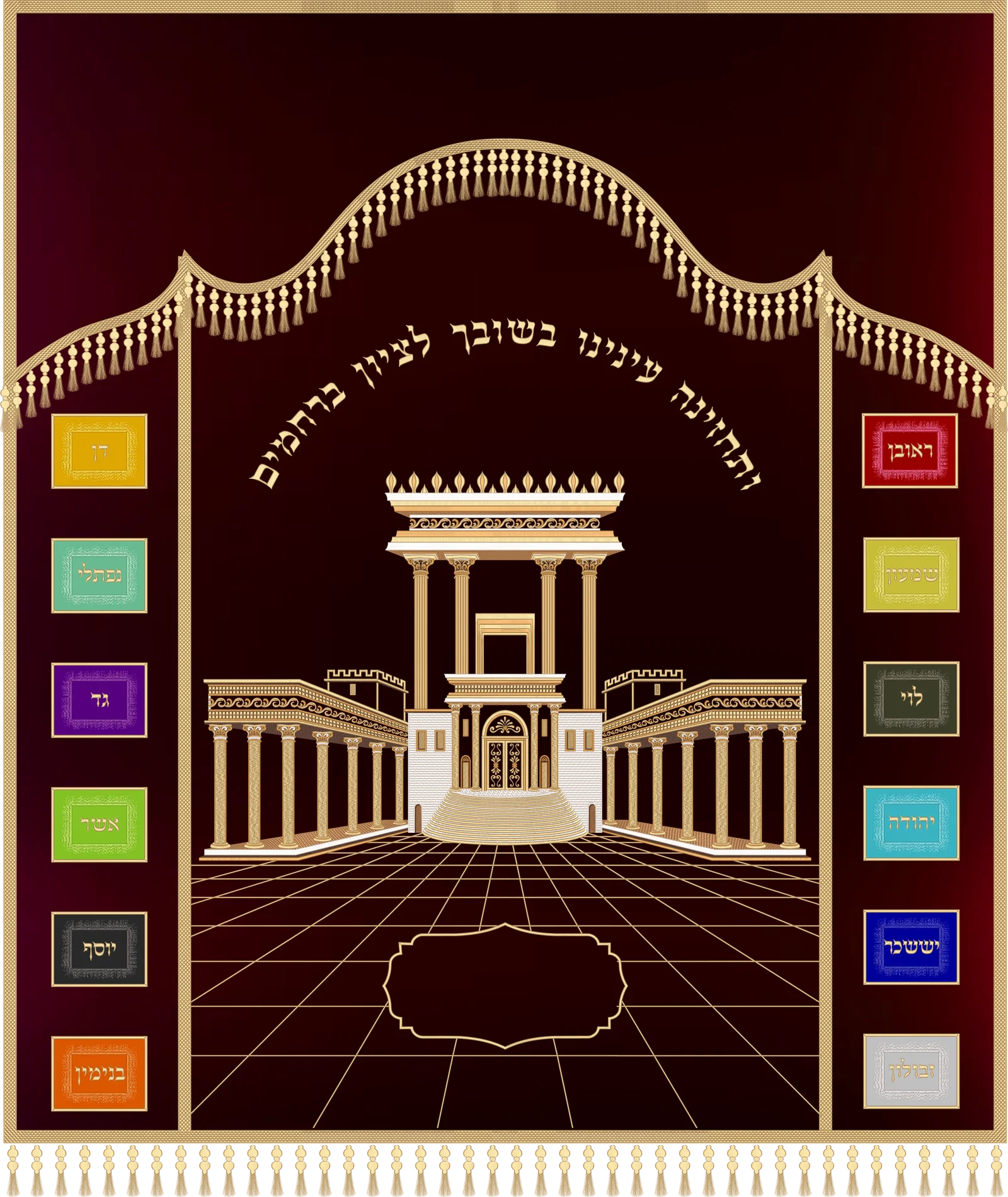
- The golden menorah set against a glowing sky, like the one in this curtain set against a Jerusalem sunset, or the hills themselves, as in this design framed by mountains.
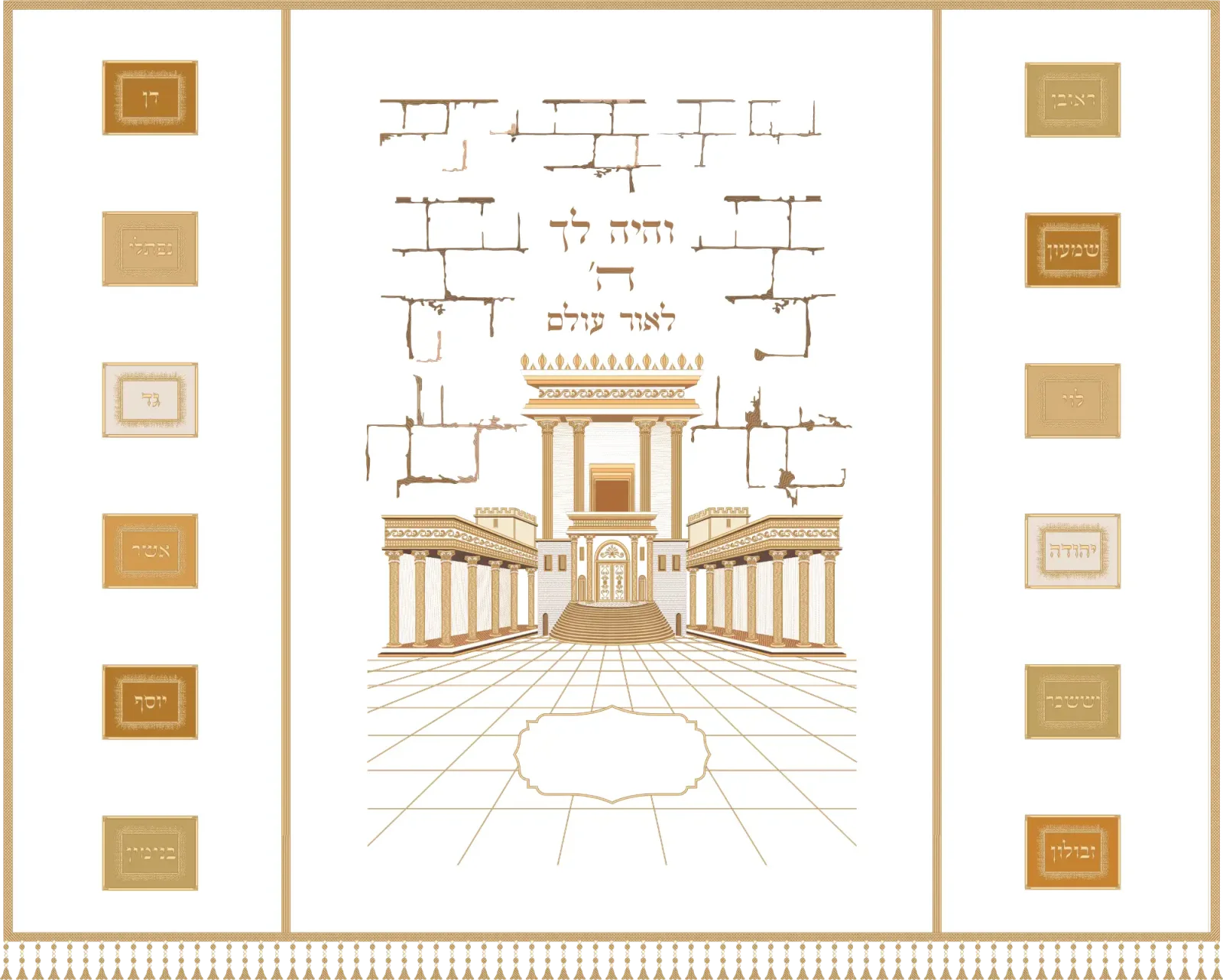
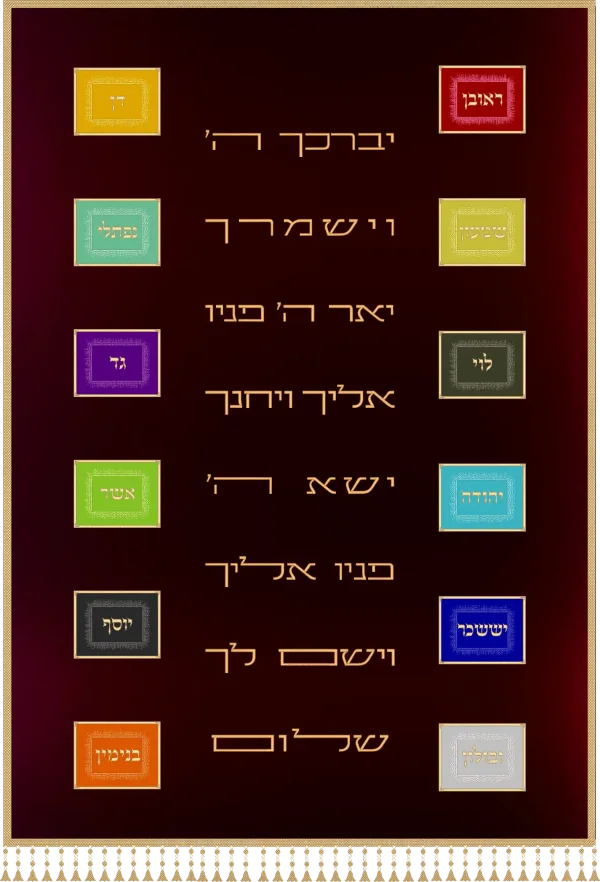
- The twelve tribes who once brought their offerings to the Temple, portrayed in this tribes-and-Temple parochet.
Why Congregations Choose a Parochet Beit HaMikdash
Congregations choose a parochet beit hamikdash because it links private prayer to a shared national memory in a single glance. The Temple's loss is mourned throughout the Jewish calendar, most visibly during the Three Weeks and on Tisha B'Av, and its rebuilding is a recurring theme in daily prayer — from "ותחזינה עינינו" to the closing words of the Amidah. Hanging a curtain that pictures the Temple in Jerusalem in front of the ark gives that longing a visible, physical presence in the room, rather than leaving it only in words. For many communities, it also feels like a natural match for an aron kodesh that already orients the sanctuary toward Jerusalem.
Comparing Common Beit HaMikdash Parochet Themes
Workshops embroidering a parochet beit hamikdash typically draw from a handful of recurring themes, each with its own visual tone.
| Theme | Key Imagery | Overall Feel |
|---|---|---|
| Temple façade | Columns, gates, and the outline of the sanctuary | Majestic and architectural |
| Menorah & Temple Mount | Golden menorah against the Mount's silhouette | Luminous and symbolic |
| Sunset over Jerusalem | Temple outline set against warm sunset tones | Reflective and emotional |
| Twelve tribes | Tribal emblems surrounding Temple imagery | Communal and historic |
Materials and Hand Embroidery Behind the Design
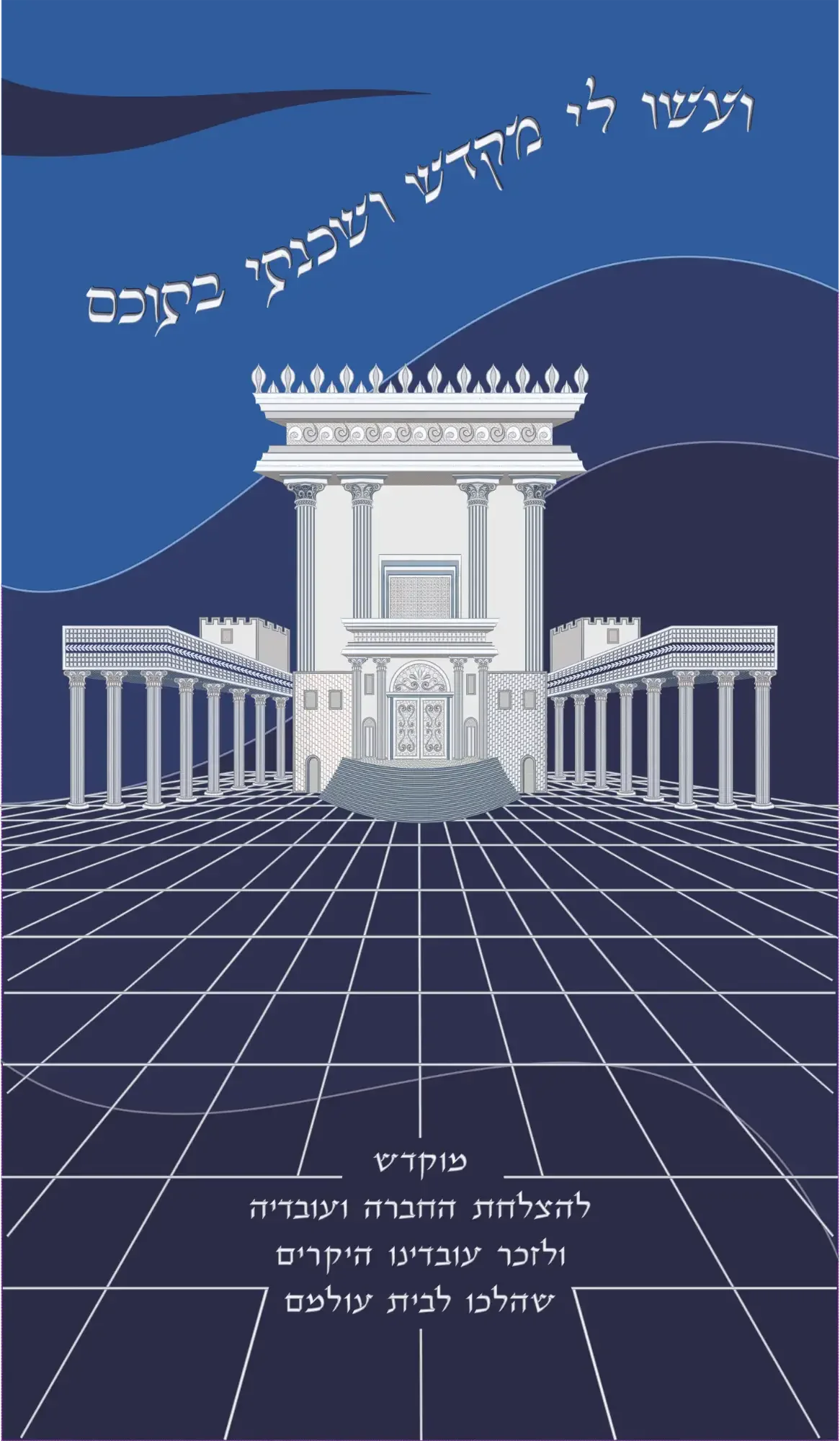
A parochet beit hamikdash is typically built up in layers of hand embroidery rather than printed in a single pass, which is what gives the Temple's columns, stonework, and sky real depth and texture. Many designs combine several fabrics in one curtain, as seen in this Temple-themed parochet that blends several fabrics, using contrasting textures to separate the architecture from the sky and the ground. Metallic threads are often reserved for the menorah or the Temple's gates, where a touch of gold or silver catches the light and draws the eye. Workshops such as Hichala (היכלא) specialize in embroidering these Temple-themed curtains to order, working from a synagogue's chosen imagery and measurements rather than a fixed template.
Choosing the Right Parochet Beit HaMikdash for Your Synagogue
Before commissioning a parochet beit hamikdash, it helps to work through a short list of practical decisions:
- Measure the ark opening precisely, since the curtain should frame it without excess fabric pooling at the sides or floor.
- Decide which Temple imagery feels most meaningful to your community — the façade, the menorah, the tribes, or a combination.
- Think about companion pieces, such as a matching Torah mantle or cover, so the ark and the scrolls within it read as one set.
- Browse our gallery of parochot for inspiration before settling on a final composition and color palette.
Frequently Asked Questions
What does a Temple-themed ark curtain symbolize?
It symbolizes both remembrance of the Holy Temple that once stood in Jerusalem and the hope, voiced throughout Jewish prayer, for its future rebuilding.
Can it combine other designs, like the twelve tribes or a verse?
Yes — many congregations ask for a design that layers Temple imagery with the twelve tribes, a Jerusalem landscape, or a meaningful verse embroidered along the border.
How is this type of parochet made?
It is built through hand embroidery, often combining multiple fabrics and metallic threads to give the Temple's architecture and the menorah visible texture and depth.
Closing Thoughts
A parochet beit hamikdash (פרוכת בית המקדש) is more than decoration on the ark — it is a quiet, recurring reminder, every time a congregation gathers to pray, of what Jerusalem's Temple once was and what it is still hoped to become. Whether a community chooses a simple façade or a fuller scene with the menorah, mountains, and tribes, the result is a curtain that carries memory and hope into the heart of the sanctuary.
עוד מהעולם של ארגמן
פרוכות לארון קודש
Parochet Shvatim (פרוכת שבטים): The Ark Curtain That Unites the Twelve Tribes of Israel
פרוכת שבטים curtains embroider the Twelve Tribes of Israel, bringing unity, heritage, and beauty to the synagogue's aron kodesh.
פרוכות לארון קודש
Parochet LeChagim (פרוכת לחגים): The Tradition of Festival Ark Curtains
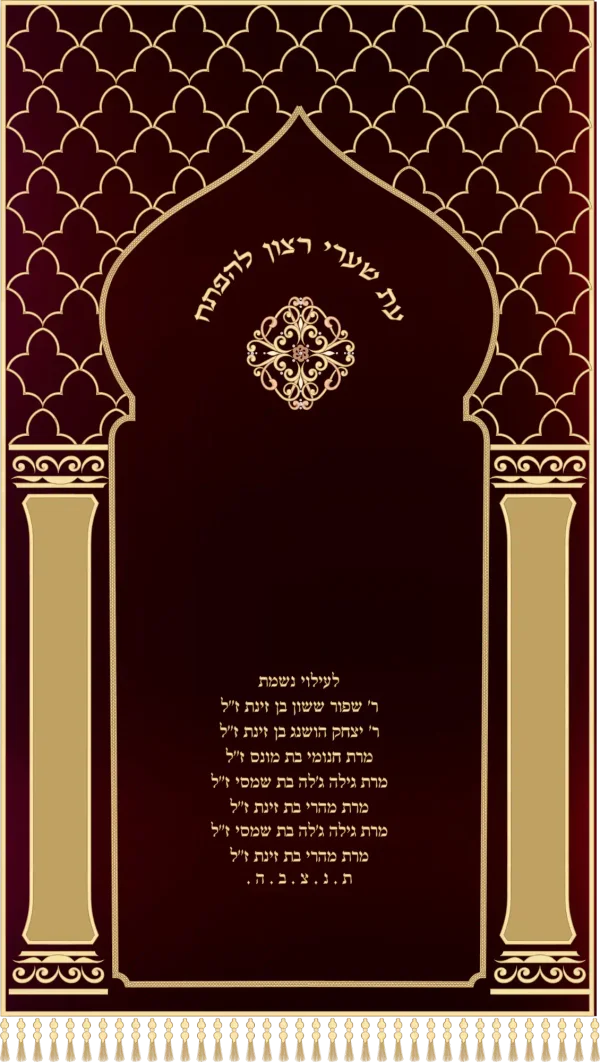
A look at the parochet lechagim tradition - festival ark curtains that mark the Jewish holidays with fitting color and design.
פרוכות לארון קודש
Parochet Dugma Beit HaMikdash (פרוכת דגם בית המקדש): A Guide to the Temple-Pattern Ark Curtain
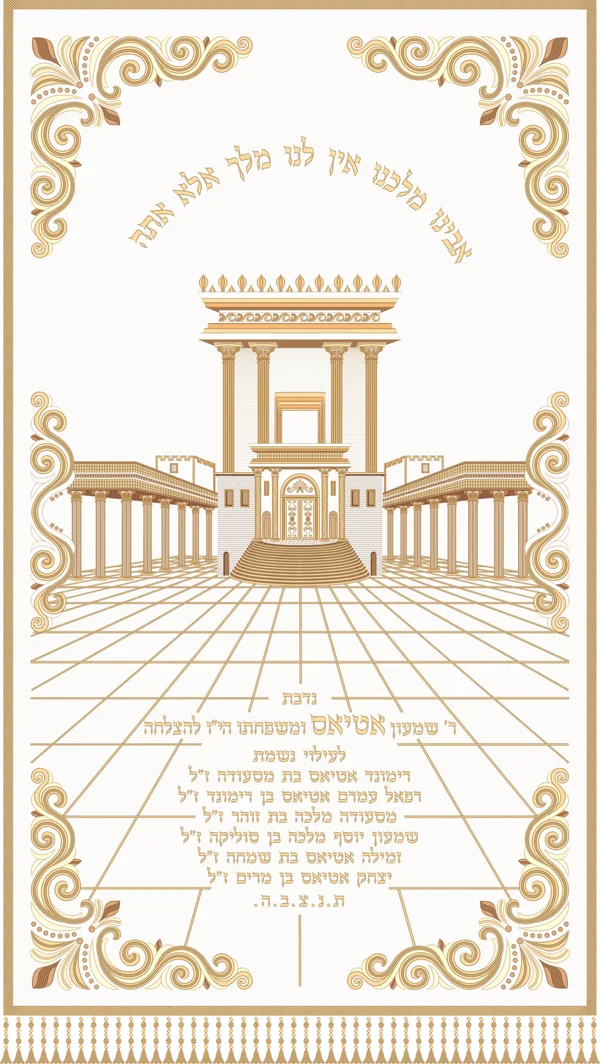
Discover what a פרוכת דגם בית המקדש is, the Temple motifs it features, and how to choose the right design for your Aron Kodesh.